
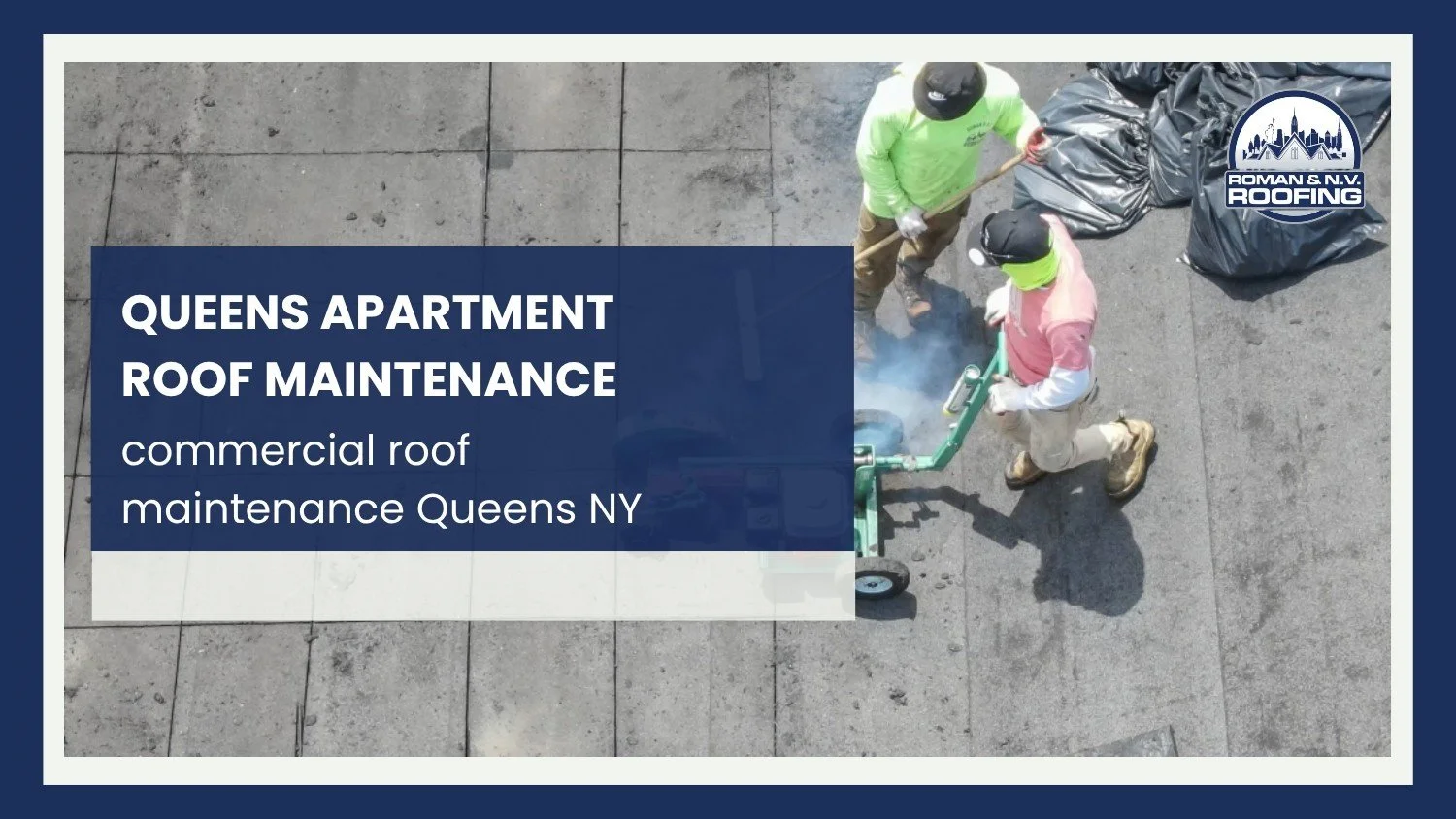
A roof on a Queens apartment or mixed-use building doesn't fail all at once. It deteriorates gradually through small, compounding conditions that go unaddressed between formal inspections. By the time a leak shows up in a tenant's unit or a drain backs up during a storm, the roof has usually been declining for a season or more.
Consistent roof maintenance Queens buildings is what keeps that deterioration from compounding into an emergency. This covers what a practical maintenance program looks like for apartment and mixed-use buildings in Queens, what it should include at each interval, and why the investment consistently costs less than the alternative.
Why Queens Buildings Need a Different Maintenance Approach
Queens has a more varied building stock than most NYC boroughs. You have mid-rise apartment buildings from the 1950s and 60s sitting next to newer mixed-use developments with ground-floor retail and residential above. Older buildings carry modified bitumen and built-up roofing systems. Newer construction uses TPO or EPDM single-ply membranes. Each system ages differently and has different maintenance requirements.
Mixed-use buildings add another layer of complexity. A ground-floor commercial tenant often means rooftop HVAC equipment, grease exhaust vents, and additional penetrations through the membrane. Each one is a potential water entry point, and each one needs to be checked and maintained on a schedule that accounts for how much stress the equipment puts on the surrounding membrane.
Commercial roof maintenance Queens NY also has to account for the borough's specific exposure. Queens sits at the edge of the coast, and buildings in areas like Rockaway, Howard Beach, and Flushing experience wind and moisture loads that accelerate membrane wear faster than more sheltered inland locations. A maintenance interval appropriate for a protected Brooklyn building may not be sufficient for a Queens building with significant coastal or open-area exposure.
What a Roof Maintenance Program Should Cover
Queens apartment roof maintenance isn't a single task. It's a scheduled set of inspections, cleaning, and minor repairs that together keep the roof system performing through its full expected lifespan. Here's what a complete program includes across the year.
Spring inspection and post-winter assessment
Winter in New York puts more stress on flat roofs than any other season. Freeze-thaw cycles expand and contract membrane seams, push moisture into micro-cracks, and stress flashing at every transition point. A spring inspection after the last freeze gives you a clear picture of what the winter did to the roof before the heavy rain season begins.
Spring maintenance should cover:
Full membrane walkthrough checking for new blisters, cracks, or open seams
Flashing inspection at all parapet walls, equipment curbs, and penetrations
Drain clearing and flow testing to confirm winter debris hasn't restricted drainage
Coping cap and parapet check for any movement or cracking from freeze-thaw stress
Documentation of any conditions that need repair before summer rain season
Summer monitoring and drain management
Summer in Queens brings intense UV exposure and heat island effect from surrounding pavement and low-rise commercial rooftops. The primary maintenance tasks in summer are keeping drains clear during heavy rain periods and monitoring for membrane surface degradation from UV exposure.
Roof drains in urban Queens buildings collect debris year-round, but summer storms deposit significant organic material. A drain that's partially blocked going into a July or August storm can back up fast and force water under membrane seams that are already stressed from heat expansion.
Fall preparation before freeze season
The fall inspection is the most critical in the annual cycle for Queens apartment and mixed-use buildings. What gets identified and repaired in October and November doesn't have to survive a winter in a deteriorating state.
Fall roof maintenance Queens should include:
Full membrane and seam inspection before temperatures drop
Flashing re-sealing at any points showing early separation
Drain screens cleared and checked for proper fit
Penetration seals around HVAC units and exhaust vents inspected and re-sealed where needed
Any minor repairs completed before the first freeze
Winter spot checks after significant weather events
A full roof walkthrough in icy conditions isn't always practical or safe. But after significant snow loads or ice events, a visual check from safe access points can identify immediate concerns like standing water that has frozen over a blocked drain, or membrane that has visibly split under ice weight.
Maintenance Priorities for Mixed-Use Buildings Specifically
Mixed-use buildings in Queens have maintenance needs that standard apartment building programs don't fully cover. The commercial component at street level typically drives rooftop activity that accelerates wear.
Grease exhaust and kitchen ventilation penetrations
Restaurants and food service tenants on the ground floor of mixed-use buildings run exhaust systems that terminate on the roof. Grease residue accumulates around these penetrations and degrades membrane material faster than normal weathering. The seals around grease exhaust penetrations need to be checked more frequently than standard pipe penetrations and cleaned of residue before re-sealing.
HVAC equipment density
Commercial ground-floor tenants typically run more HVAC equipment than residential tenants, which means more curbs, more penetrations, and more vibration transferred to the membrane. Equipment curb flashings on mixed-use buildings should be inspected at every maintenance interval, not just annually.
Rooftop access wear
Mixed-use buildings have more frequent rooftop access for HVAC servicing, exhaust cleaning, and equipment maintenance by commercial tenant contractors. Foot traffic from multiple service providers, not all of them careful around membrane surfaces, creates wear patterns and puncture risks that aren't a factor on residential-only roofs. A maintenance program for a mixed-use building should include checking high-traffic paths across the membrane and placing walk pads where regular access routes exist.
The Difference Between Maintenance and Repair
One of the clearest ways to explain the value of commercial roof maintenance Queens NY is to draw the line between what maintenance prevents and what repairs cost when maintenance doesn't happen.
Maintenance catches a seam that's beginning to lift and re-bonds it before it opens. The cost is labor for a maintenance visit. A repair after that same seam has been open through a rain season involves fixing the seam, removing and replacing saturated insulation, and potentially repairing ceiling damage in the unit below. The cost is several times higher.
The same pattern holds for drains, flashings, and penetration seals. Cleared drains and re-sealed penetrations during a scheduled maintenance visit cost a fraction of what it costs to repair the membrane damage that results from a season of restricted drainage or an open penetration seal.
For Queens apartment building owners managing occupied residential and commercial tenants, the calculation is also about tenant relations and liability. A ceiling leak in a retail tenant's space during business hours is a different conversation than a roof maintenance report showing the drain was cleared and the membrane was checked last month.
How to Set Up a Roof Maintenance Program for Your Queens Building
A practical maintenance program for a Queens apartment or mixed-use building doesn't need to be complicated. It needs to be consistent and documented.
The basic structure for most buildings:
Spring: Full inspection and post-winter assessment, drain clearing, repair of any winter damage
Summer: Drain monitoring after heavy rain events, UV surface check mid-season
Fall: Full inspection and pre-winter preparation, penetration re-sealing, flashing check
After significant weather: Visual spot check for immediate concerns
Beyond the schedule, documentation matters. A maintenance log with photos, dates, and observations from each visit gives the building owner a clear record of roof condition over time. It's useful for insurance purposes, for tracking how specific conditions are progressing, and for informing decisions about when the roof is approaching the point where maintenance alone isn't sufficient and a more significant investment is needed.
A roofing contractor who handles Queens apartment roof maintenance should be able to provide a written report after each visit, not just a verbal summary.
When Maintenance Isn't Enough
Roof maintenance extends the life of a roofing system. It doesn't make an end-of-life roof last indefinitely. Part of a good maintenance program is honest assessment of where the roof stands in its lifecycle.
Signs that a Queens apartment or mixed-use building roof is past the point where maintenance is the right answer:
Membrane blistering and seam failures are occurring across multiple areas, not isolated points
Moisture scanning shows widespread saturation in the insulation layer beneath the membrane
The roof deck has deteriorated sections that compromise the substrate for any repair
The membrane is at or past its expected service life and repairs are becoming more frequent each season
At that point, the maintenance program should transition into planning for replacement rather than continuing to invest in a system that's reached its limit.
FAQ: Roof Maintenance for Queens Apartment and Mixed-Use Buildings
How often should a Queens apartment building roof be inspected for maintenance? A minimum of twice a year, in spring and fall, covers the most critical maintenance intervals for Queens apartment roofs. Spring catches winter damage before rain season. Fall addresses pre-winter preparation before freeze-thaw cycles begin. Mixed-use buildings with rooftop equipment and higher foot traffic benefit from quarterly inspections given the additional stress those factors put on the membrane.
What does commercial roof maintenance in Queens NY typically include? Commercial roof maintenance Queens NY covers membrane inspection for seam failures and surface degradation, drain clearing and flow testing, flashing inspection and re-sealing at parapet walls and equipment curbs, penetration seal checks around pipes and HVAC units, and documentation of current conditions with any repair recommendations. For mixed-use buildings, grease exhaust penetration cleaning and equipment curb flashing checks are added to the standard scope.
How does roof maintenance reduce long-term costs for Queens building owners? Maintenance catches small failures before they become water intrusion events. A re-bonded seam or cleared drain during a maintenance visit costs a fraction of what it costs to repair membrane damage, replace saturated insulation, and fix interior ceiling damage after a leak. For Queens apartment buildings with occupied residential tenants, avoiding leak events also reduces tenant complaints, liability exposure, and potential rent abatement situations.
What's different about roof maintenance for mixed-use buildings versus residential-only? Mixed-use buildings have more rooftop penetrations from commercial HVAC and exhaust systems, more frequent rooftop access by multiple service contractors, and higher vibration loads from commercial equipment. These factors accelerate wear at penetration seals and equipment curbs and increase the risk of membrane damage from foot traffic. Maintenance programs for mixed-use buildings should address these additional stress points at more frequent intervals than standard residential apartment building programs.
When should a Queens building owner consider replacing the roof instead of continuing maintenance? When blistering, seam failures, and active leak events are occurring in multiple areas rather than isolated points, when moisture scanning shows widespread insulation saturation, or when the membrane is at or past its expected service life, replacement becomes the more cost-effective path. A maintenance program should include honest condition assessments at each visit so building owners can plan for replacement before the roof reaches emergency failure.
Building a Maintenance Program That Actually Holds
Roof maintenance for Queens apartment and mixed-use buildings works when it's consistent, documented, and scoped to match what the building actually needs, not a generic checklist applied the same way to every property.
The right program covers the membrane, the drains, the flashings, and the penetrations on a schedule that accounts for the building's age, the roof system type, and the specific stresses that come with mixed-use occupancy or coastal exposure in Queens.
If you own or manage an apartment or mixed-use building in Queens and want to put a proper maintenance program in place, reach out to our team to assess the current roof condition and build a schedule that fits the building.
